Discover the wonders of India through history, culture and nature
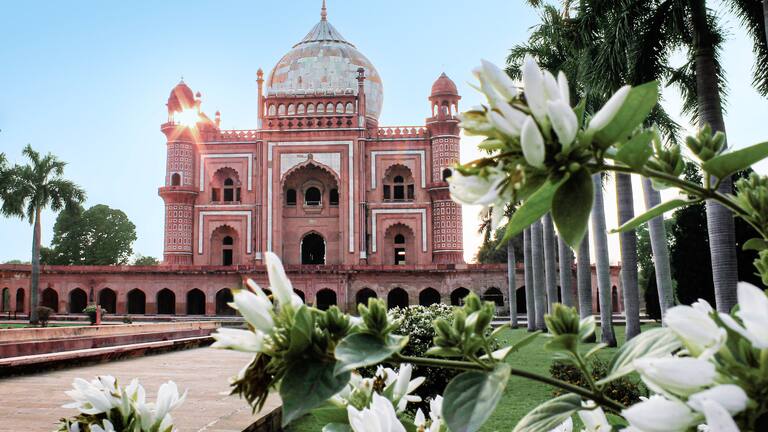
Delhi: the bustling centre of India
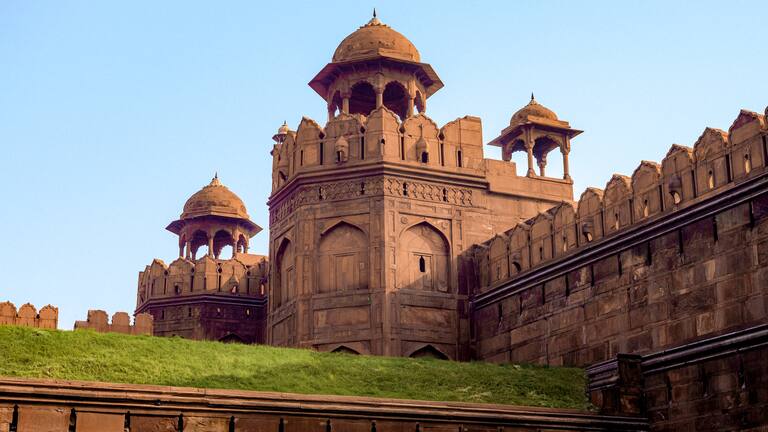
Start your exploration with Old Delhi, home to historic sites like the Red Fort, a UNESCO World Heritage site and a symbol of India’s Mughal past. The red sandstone fort, built by Shah Jahan in the 17th century, encloses an entire complex of palaces, gardens and even a mosque. Right next door to the fort is Jama Masjid, one of the largest mosques in India. It is known for its beautiful interior, including intricate marble floors.
After taking in the history, don’t miss the nearby area of Chandni Chowk. It dates from the 17th century and is one of the oldest market areas in Delhi, famous for its narrow lanes, delicious street food and many shops. The market is partly divided into streets specialising in specific foods or goods.
For a more modern experience, head to New Delhi. The India Gate, a war memorial, is one of Delhi’s best-known landmarks. Visit in the evening when locals gather for picnics, and the atmosphere can feel festive. Another New Delhi landmark is the Lotus Temple, a Bahá’í House of Worship completed in 1986 and shaped like a lotus flower.

Make time for a half-day trip to Qutub Minar in Mehrauli, south Delhi, another UNESCO site a bit further from the centre. The 73-metre minaret, begun in 1199, is part of a larger complex and is an important part of the country’s Islamic history.
Agra and Jaipur: the Golden Triangle with Delhi
The Golden Triangle connects three of northern India's major sightseeing cities: Delhi, Agra and Jaipur. The circuit is about 720 kilometres by road, and each leg takes four to six hours by car. A Golden Triangle tour gives you a good introduction to the country.
Agra is the city known for the Taj Mahal, one of the New Seven Wonders of the World, built between 1632 and 1648. While sunrise is a popular time to visit, afternoons can be less crowded, allowing for a more peaceful experience. The Taj Mahal is closed on Fridays. Buy tickets in advance from the Archaeological Survey of India’s official online service to avoid the long queues.

While in Agra, visit the Agra Fort, a UNESCO World Heritage Site and the main residence of the Mughal emperors until 1638. Fatehpur Sikri, 37 kilometres from Agra, should not be missed either. Built by Emperor Akbar as his capital between 1571 and 1585, it is an entire city of Mughal palaces, mosques and courtyards. Abandoned soon after because of water shortages, it is now a remarkably well-preserved ghost town.
After all the cultural history, you should balance it with something more outdoorsy. One option is to visit one of the many wildlife sanctuaries in the area. Three to consider: the Agra Bear Rescue Facility, run by Wildlife SOS; the Soor Sarovar Bird Sanctuary, about 30 kilometres from Agra; and the National Chambal Sanctuary, which protects gharials and Ganges river dolphins along the Chambal River.
Next up on your Golden Triangle tour is Jaipur, also known as the Pink City. The main attraction is Amber Fort, a UNESCO World Heritage Site about 11 kilometres from the city centre. The palace complex, commissioned by Maharaja Man Singh I in 1592, overlooks Maota Lake. Also make time for the Hawa Mahal (Palace of Winds). Built in 1799, the pink sandstone landmark of Rajasthani architecture has 953 intricate lattice windows.
If you only visit one museum on your India trip, make sure it is the Albert Hall Museum, the state museum of Rajasthan, which opened in 1887. The façade of the museum building is an unexpected blend of Indian, British and Islamic architectural styles, known as Indo-Saracenic. The museum’s interior is just as eclectic, housing artefacts including art, antiques, weaponry and even an Egyptian mummy.
Beyond the Golden Triangle
Even though the Golden Triangle offers enough to see for months, you might want to venture to a couple of special spots just beyond it, too.
About 60 kilometres from Agra, you can find two of India’s major Hindu pilgrimage sites, the twin cities of Mathura and Vrindavan. Mathura, on the banks of the Yamuna River, is said to be Krishna’s birthplace, and on the site you can now find the temple of Sri Krishna Janma Bhoomi. Vrindavan is the city where Krishna spent his childhood, and it is home to many temples dedicated to Krishna and his consort, Radha.

Wildlife lovers should take a 170-kilometre detour from Jaipur to Ranthambore National Park. Declared a national park in 1980, it covers 1,334 square kilometres and is known for its Bengal tiger conservation. Guided safaris are the way to explore the park and its wildlife.
To end your trip memorably, stay for a night or two in Neemrana, a fort palace built in 1464 and transformed into a hotel about 120 kilometres from Delhi. The palace complex has nine wings on 14 levels, built over 2.5 hectares of hillside. A night here gives you a taste of royal life and a new perspective on the historical sites you’ve seen.
Finnair flies from Helsinki to Delhi daily.