Sun, paella and lots of green space in Valencia
Ovidio Colmenero is originally from Valencia but has lived in Finland for almost nine years. Ovidio works as a Safety & Compliance Advisor in Finnair’s Safety, Security and Compliance Management department.
“I was born in Valencia, went to school there, and studied Aerospace Engineering at the Technical University of Valencia (UPV). I lived in Valencia until the age of 21, when I moved abroad to study in Germany for one year and then to Kuopio, Finland. My parents still live in Valencia and I visit the city several times a year”, Ovidio says.
Ovidio describes Valencia as having all the elements of a big city like Madrid and Barcelona, but on a smaller scale, making it an easier and more friendly city to discover.
“It is not as overcrowded as the biggest cities and, therefore, less stressful. It is, however, Spain’s third-largest city after Madrid and Barcelona, with around 845,000 inhabitants in the city and more than 1.6 million in the metropolitan area. Valencia is attractive to locals and visitors because of its location on the Mediterranean, with the beach next to the city.”
Authentic paella or a mid-morning sandwich?
“The number one thing in Valencia is paella, which the whole world knows. Paella originates from Valencia and is part of the local identity. Valencian people are the proud masters of the dish”, Ovidio says.

For authentic paella, Ovidio recommends heading to Malvarrosa Beach: “Most of the restaurants around Malvarrosa specialise in making paellas and offer excellent quality. Be careful not to pick one of the cheap options around very touristy areas, as they are usually not freshly made.”
Valencia also has its own food traditions beyond paella: “Try the local drink ‘Horchata’. It looks like milk but has nothing to do with it”, Ovidio says.
Horchata is, in fact, a cold and sweet drink made from tigernuts, water, and sugar. It’s completely plant-based and has a nutty, slightly earthy flavour. It is often served with a pastry called fartón, which you dip into the horchata.
Ovidio also mentions the tradition of Esmorzaret, or Almuerzo in Spanish, a mid-morning meal with a huge sandwich (bocadillo), olives, peanuts, a beer or other cold drink and a coffee. You can choose the filling; popular ones include tortilla de patata, calamares and different kinds of meat. Ovidio’s favourite sandwich is the Chivito, with a filling of tenderloin, bacon, cheese, tomato, lettuce and mayo.
“Almuerzo started as a meal for field workers, who needed energy for the rest of the day, but now everyone enjoys it. It is usually served in traditional Spanish bars between 9:30 and 11:30 a.m. and offers a hearty break and a moment for socialising”, Ovidio shares.
Fallas festivities and cutting-edge architecture
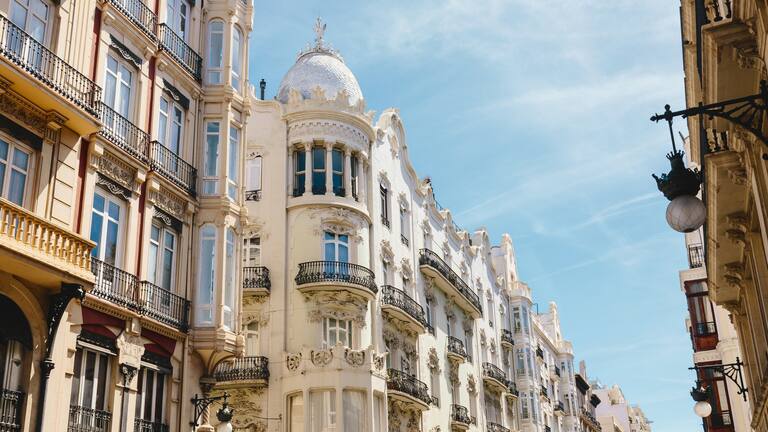
Valencia’s mix of old and new gives it a character of its own.
“The city has beautiful and diverse architecture, ranging from the emblematic buildings of the old town to the avant-garde architecture of the City of Arts and Sciences, located in the city park of the old Turia riverbed”, Ovidio explains.

The Turia River park itself is worth seeing too. “You can walk all the way from one side of the city to the other through the park. I would recommend starting in ‘Parque de Cabecera’ and walking downstream all the way until the City of Arts and Sciences, following ‘the water path’. This route is about 8–9 km”, Ovidio suggests.
In the city centre, Valencia Cathedral houses the Holy Chalice, venerated as the Holy Grail. Ovidio also recommends climbing the Micalet Tower at Valencia Cathedral: “From the top of the tower, you can see the whole city of Valencia. Definitely worth the climb.”

And if you visit in March, you will find yourself in the middle of the Fallas Festival. It is an annual event to celebrate the arrival of spring. The city comes alive with giant, colourful sculptures, music, fireworks, and street parties. The festivities run from 1 to 19 March and end with the burning of the sculptures on the final night.
Beach hangouts and exciting sports

Valencia’s Mediterranean setting means you’re never far from the sea. Ovidio recommends visiting both the Valencia city beaches as well as venturing to nearby villages.
“The beach of ‘El Saler“, located within L’Albufera Natural Park, stands out for its natural surroundings, large dunes and extensive pine forests, giving it a wild and peaceful appearance”, he says.
Also, seeing the sunset at the L’Albufera lagoon is popular among both locals and visitors.
If you are into sports, you will not be disappointed either. During the football season of ‘La Liga’, the Mestalla Stadium offers some impressive sporting moments.
“Mestalla is the home of the Valencia CF football team and one of the biggest football stadiums in Spain”, Ovidio says.
When to go?
Valencia is a year-round destination thanks to its sunny Mediterranean climate. Summers can be hot, but the rest of the year is very mild. The Fallas festival in March is a lively time to visit, but it can be intense with big crowds and lots of noise. If you prefer a quieter visit, choose another time of year. Finnair flies direct from Helsinki to Valencia year-round.
“The city has enough to offer that a weekend visit can feel short, and you will not get bored on a longer visit. Valencia is a versatile city suitable for many different kinds of travellers, and I have only ever heard positive things from visitors in Valencia”, Ovidio sums up.