Flights to Oslo
from Toronto
Round trip from
1,014 CAD
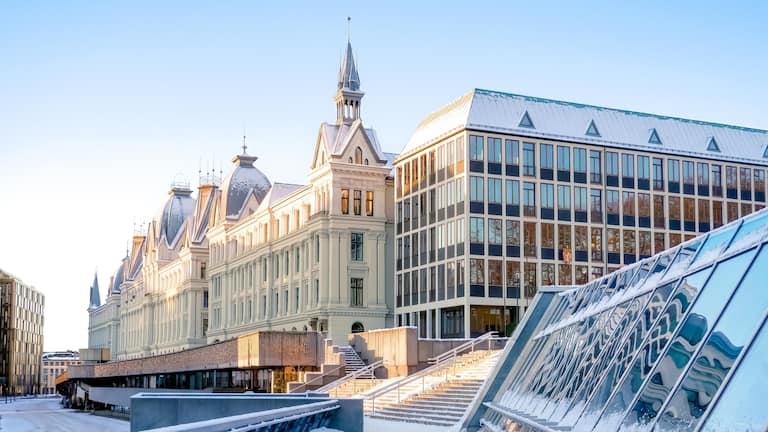
Oslo – a city on a fjord
Oslo is the capital and largest city of Norway. Over time, it developed from a trading post into the country’s centre for industry and commerce. Set on a fjord and surrounded by rolling hills, Oslo is a place where striking natural beauty meets everyday urban life.
Direct flights to Oslo
Finnair operates direct flights from Helsinki to Oslo multiple times a day. The flight time is 1 hour and 25–35 minutes. Oslo Airport Gardermoen is situated about 50 km northeast of the city centre, which you can reach in approximately 20–25 minutes by train. Alternatively, you can reach the city centre in about 35–50 minutes by taxi or 40–60 minutes by bus. However, the journey may take longer during rush hours. Book flights to Oslo, a city that takes your breath away with its impressive nature and culture!
Sights and activities in Oslo
Viking Ship Museum – Norway is well known for its Viking history. You can get a glimpse into the past at the Viking Ship Museum, where on display is the incredibly well-preserved Oseberg ship, dug up from a burial mound. Several other ships and a range of Viking burial artefacts are also housed here. The museum is currently closed for construction and will reopen in 2027.
Kon-Tiki Museum – this museum houses artefacts from the many journeys of adventurer Thor Heyerdahl, famous for his crossing of the Pacific on a balsawood raft. A fascinating sight in Oslo that is a must for any adventurous spirit.
Oslofjord – a long inlet in southeast Norway, forming Oslo’s main waterfront. It’s a wonderful nautical playground often full of watercraft heading from place to place. Rent a kayak and paddle along the waterfront or head to an island for a taste of nature.
Frogner Park – best known for the twisting humanoid shapes of the Vigeland sculpture installation it hosts. Surrounded by lush green lawns, this park is a popular destination for locals to enjoy sunshine and fresh air.
Holmenkollbakken – a ski jumping hill that’s hard to miss, with its tower rising above the surrounding homes. Site of many international winter sports competitions, this landmark has a museum and viewing platform giving visitors unobstructed views of Oslo city.
Royal Palace – set in expansive open grounds, this castle gives visitors a sense of the grandeur reserved for Norwegian royalty.
Sights and activities near Oslo
Sognsvann – a beautiful lake just about 30 minutes from Oslo by metro or car. With its green surroundings and various leisure activities, it’s a favourite place for locals to come and enjoy a relaxing day off.
Tusenfryd amusement park – if you need some excitement to liven up your day, head to Norway’s largest amusement park. The journey from Oslo takes only around 30 minutes by bus or car.
Fredrikstad – this coastal city with a strong sense of history lies about 1 hour and 15 minutes from Oslo by bus or car. While there, be sure to explore Gamlebyen, one of Northern Europe’s best‑preserved fortified old towns.
Lillehammer – a quaint town easily accessible for a day trip. Lillehammer is known for its charming streets, historic wooden houses and cultural attractions such as Lillehammer Olympiapark and the open-air museum Maihaugen. It takes approximately 2.5 hours to reach this city from Oslo by bus or car.
Shopping in Oslo
Scandinavian design is alive and well in Oslo, with many cutting-edge boutiques to explore. Your favourite brands and chains are in easy reach in the city centre, but beware of the price tags. Shopping in Oslo may be a little pricier than you’d expect.
Karl Johans gate – the heart of shopping in Oslo, with a wide range of shops, department stores and popular brands along its pedestrian-friendly street. For luxury brands, head to nearby streets such as Nedre Slottsgate and Øvre Slottsgate.
Mathallen – a food hall with speciality shops and eateries offering Norwegian and international products and dishes.
Grünerløkka – this part of town has a bohemian feel, dotted with vintage shops, trendy cafés and restaurants.
Grønland – a multicultural neighbourhood where many cultures from around the world meet. The area is known for its diverse styles and flavours.
Norway’s cuisine is distinct and you can find local specialties served all over Oslo.
Kjøttkaker – similar to the Swedish variety of meatballs but with a rougher consistency, this is common and filling Oslo food.
Fårikål – bone‑in mutton stewed with cabbage and served with boiled potatoes. Norway’s national dish.
Brunost – a traditional Norwegian brown cheese, made by boiling whey until the sugars caramelise.
Salmon – smoked salmon is a very well-known Norwegian dish, and you can sample it in a multitude of ways in Oslo’s many eateries. Gravlax, a traditional Norwegian dish of salmon cured with salt, sugar and dill, is also particularly good.
Lutefisk – dried cod prepared by preserving in lye.
Krumkake – crispy, thin pastry rolled into a flute shape and sometimes filled with whipped cream.
Beer – Ringnes and Hansa are the most common lagers on offer, but many smaller brands provide some variety. Light and mid-strength beer is available from supermarkets, while stronger beer is only available from the state-run vendor Vinmonopolet.
Wine and spirits – available in licensed premises and most restaurants. Can only be purchased from Vinmonopolet. Norway’s best-known traditional spirit is Akevitt, popular across the country.
Coffee – a common everyday drink, widely available and often drunk simply with or without milk.
Transport in Oslo is efficient and easy to use. The same tickets can be used across all modes of public transport. Day or period tickets offer better value than single tickets if you plan to travel more than once. Always buy your tickets in advance, as prices are higher when bought on board.
Metro – Oslo’s metro is modern and fast. The lines run from the city centre to many parts of the city, including a circular route serving inner areas.
Tram – several lines thread through the city, stopping at many important sights and major areas of interest.
Bus – you can easily reach the outer parts of Oslo by bus with many lines criss-crossing the city.
On foot – most of Oslo is easily walkable with only a few hills to contend with. Pedestrian areas are common and drivers are accommodating of foot traffic.
By bike – many bike paths can be found throughout the city, allowing for easy transport around town by bike.
Train – long-distance trains head from Oslo to all parts of the country, with routes leaving regularly from Oslo Central Station. Trains are modern and include sleeper cabins for long-distance journeys.
Currency – Norwegian krone (kr).
Official language – Norwegian.
Electricity – 230 volts, 50 Hz, type C and F plugs.
Tips – not expected but appreciated.
Payment – cards are accepted almost everywhere.
Time zone – Central European time, UTC+1 (standard time) / UTC+2 (daylight saving time).
Water – safe to drink.
Climate – humid continental climate, warm in summer (average temperature usually ranging from a low of 11°C to a high of 23°C) and cold in winter (average temperature usually ranging from a low of -5°C to a high of 2°C).
High season – typically from June to August. Celebrations such as Norwegian Constitution Day in May and Christmas in December also attract more crowds.
Low season – typically from November to March.
Oslo Airport Gardermoen (OSL)
The airport is located 50km northeast of Oslo.
- All flights leave from the same terminal.
- Find your check‑in times.
Find travel inspiration
Navigated to page: Oslo